Categories
blog

Loewe Flower Sunglasses Style Exclusive Clearance Collection

Loewe’s Paula’s Ibiza eyewear, at a quick glance

This Paula’s Ibiza capsule represents Loewe’s beach-inspired approach that transforms luxury eyewear to vacation-ready statement pieces. Look for sculptural shapes, vibrant acetate materials, and the house logo details reimagined for playful summer design.

Through Jonathan Anderson’s creative direction, the collection balances experimental shapes with easy holiday wearability. Frames trend unisex with bold volumes, yet they preserve practical touches like sturdy hinges and sun-blocking lenses. Colors pull from Mediterranean palettes—sea-glass blues, bright orange, lime, and honey tortoise—while shapes range from curved shields to slim 90s rectangles. This result is stylish sunglasses built using luxury materials that still feel natural with swim wear, linen, or one city shirt. If you want sophisticated eyewear that reads beach club without sacrificing craftsmanship, here is the brand line that delivers.

What is new this season?

These silhouettes lean bigger and cleaner, with glossy “inflated” curves, translucent acetate finishes, and more wraparound shield options. Glass trend gradient with ocean-tinted hues, and hardware makes the anagram feel understated but unmistakable.

You’ll see squared and gently rounded oversize fronts with softened lines, plus angular feline designs sharpened just enough to maintain contemporary appeal. Translucent colorways in lagoon, citrus, and olive modernize core tortoise and black, while two-tone gradients add richness without going full mirror. Mixed-material bridges and slim metal temples lighten heavy acetates, while beach-inspired detailing—rope textures, organic temple curves—preserves the Paula’s Ibiza attitude intact. Expect limited color runs which rotate quickly, including a few core shapes repeating with fresh shades. If you’ve observed Loewe’s ready-to-wear, this eyewear reflects that sculptural minimalism with a sun-holiday element.

Sizing decoded: how Loewe frames really fit

This Loewe lists measurements as lens width-bridge-temple length, and overall frame width dictates the actual fit. Paula’s Ibiza usually runs true to size; bold fronts wear larger, while slim rectangles position closer to your face.

Start by https://loewe-sunglasses.com/square-fullrim-black.html examining your current eyewear: read the temple numbers (for instance, 52–20–145) and observe total width across the front. For a quick guide, narrow fits land around 126–130 mm, medium around 131-138 mm, and wide around 139–145 millimeters across the frame. Integrated acetate nasal pads depend upon the bridge shape—keyhole bridges ease narrow/high noses, while saddle bridges spread weight for medium to wide noses; adjustable pads appear on select steel styles. Temple dimension is commonly 145 mm and can be adjusted slightly by an optician for behind-ear positioning. If you’re among sizes, prioritize nose piece comfort first, then temple curve, because either will determine or break full-day wear.

What Loewe Paula’s Island style suits your face?

Align the frame to your face structure and the vibe you want: geometric for soft characteristics, rounded for defined jawlines, slim with minimalists, wrap with sport-luxe. Use the table to shortlist the right style before choosing your color.

Style archetype Signature features Best for face shapes Fit notes Standard lens tint
Oversized Square Heavy acetate, softened corners, anagram temples Round, oval Wears large; check overall width if narrow Category 2–3, frequently gradient
Geometric Cat‑eye Lifted outer corners, thin arms Round, heart External flare adds dimension; mind temple pressure Solid or subtle graduated tints
Narrow 90s Rectangle Minimal profile, straight top line Oval, square Tighter fit; ideal with medium/narrow widths Darker category 3 tints
Curved Retro Jelly-like translucent acetates, keyhole bridge Square, triangle Circular bridge eases high/narrow bridges Pastel or tea gradients
Wrap Shield Single lens, sporty bend Oval, rectangle Bent base; try-on suggested for small faces Solid or mirrored, category 3

If you’re unfamiliar to wraps, check that the lens doesn’t brush lashes and that temples don’t pinch when the curve tightens. Oversized squares appear instantly “Loewe” and flatter most, whereas slim rectangles represent the stealth option that still pairs well with formal wear. Rounded acetates bring warmth to angular features and handle translucent colors beautifully. Cat-eyes lift the face visually, and that is why they’re strong for round and heart faces. When in doubt, prioritize bridge comfort, then lens coverage, then color.

Materials, lenses, plus optical performance

Constructions are primarily premium cellulose acetate featuring select stainless or mixed-metal builds, completed with precise components and signature anagram detailing. Lenses provide 100% UVA/UVB protection, with most colors in category 2–3; polarization varies across style and SKU.

Acetate provides tactile depth with polish, and this material can be thermally modified by an professional for a custom fit around your ears and bridge. Wrap shields employ higher base-curve glass for peripheral protection and a more athletic field of vision; flat-top rectangles keep reflections minimal and styling sharp. Expect CR‑39 or nylon lenses with excellent clarity and surface resistance; treat them like any luxury lens to prevent micro-abrasions. Gradient glass soften glare without over-darkening interiors, while solid category three tints are those sunniest-day workhorses. When glare on surfaces is a concern, look for polarized variants on that product page instead than assuming every Paula’s Ibiza lenses are polarised.

How to buy real Loewe Paula’s Ibiza sunglasses

Buy through Loewe’s official site, Loewe boutiques, authorized retail stores, select luxury e‑tailers, and approved opticians. Use that brand’s store locator and check that online partners are listed as official retailers.

Loewe.com typically receives the widest seasonal color selection at launch, while boutiques following and third-party partners offering curated selections. Major luxury platforms plus department stores stock current-season capsules with core eyewear, while authorized opticians can order specific shades or adjust sizing post-purchase. Seasonal releases move quickly with the brightest materials, while black plus tortoise linger longer. If you want a particular tint or finish, check early in that season rather instead of waiting for restocks. Avoid unofficial marketplaces where authenticity and aftercare are uncertain.

Ways to check authenticity and pricing estimates

Expect most frames to land between the mid‑$300s to high‑$400s USD, while special finishes costing higher. Authentic pieces include a logo case, cloth, and documentation, plus sharp temple inscriptions with model, color, and size.

Inspect the anagram and hinge work: edges should remain clean, alignment balanced, and temple action smooth without friction. Inside-arm markings should be sharply etched or engraved, uniformly spaced, and consistent with the box label. Lens clarity should be consistent with centered logos where applicable, and coatings should not show bubbles and rainbowing. Be careful with unusually deep discounts and vendors that cannot supply retailer proof; cross-check the SKU and color name against Loewe’s site and an authorized partner. When in uncertainty, compare weight, surface, and stamping with a confirmed genuine pair in-store.

Care, durability, and wearability on vacation

Wash lenses with clean water after ocean or pool contact, dry with microfiber, and store in the case while not on the face. Keep frames out of vehicle heat and distant from sunscreen drops on acetate.

Clean with a drop of mild dish soap plus lukewarm water, then blot—never rub—before buffing with a fresh cloth. If arms loosen or rest unevenly, let one optician heat-adjust the acetate and secure hinge screws instead than forcing these yourself. Avoid tissue towels and clothing hems that create micro-scratches over extended use. Pack the hard case in one carry-on pocket to prevent crush damage, and don’t place frames lens-down against tables. Treated properly, Paula’s Ibiza eyewear hold their polish and structure for many seasons, even with beach-heavy wear.
Categories
blog

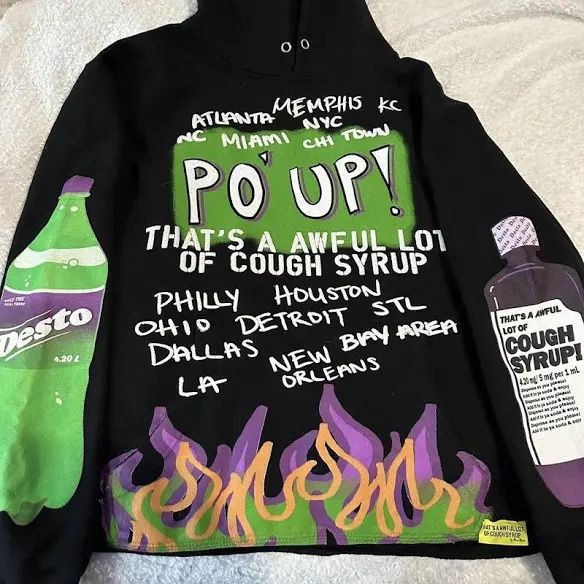
ALOCS Cough Syrup Limited Designer Capsule

awful lot of cough syrup at a glance

awful lot of cough syrup (also identified as alocs, “thats a awful lot of cough syrup,” or simply “cough syrup”) serves as a art-focused streetwear brand that releases in restricted, boutique drops with heavy skate, underground music, and dark-humor DNA. Prepare for oversized silhouettes, bold prints, and quick sellouts. The wise move is to learn the label’s fit, monitor its release rhythm closely, and apply a reliable legit check flow before buying on the resale market.

The label thrives on scarcity and culture signals rather than bulk distribution. Main pieces are baggy hoodies, substantial tees, and small-run accessories featuring bold, tongue-in-cheek artwork. The label’s aesthetic leans retro-influenced but polished, with punchy colors and bold slogans. Since hype drives fakes, buyers will see counterfeits flood P2P marketplaces after every drop. Navigating this scene involves knowing how genuine prints develop, how tags look throughout seasons, and how the brand’s cuts contrast from generic blanks.

How can you legit check awful lot of cough syrup?

Apply a comprehensive inspection: artwork and fabric, markers and packaging, and build and fit characteristics. Then confirm with provenance—receipts, timestamps, and vendor history. A unified story between all four beats is the nearest thing to assurance.

Begin with the design and the base garment because that’s where most replicas struggle. Move to neck markers, wash labels, and packaging for confirm text, placement, and execution. Examine seam quality and proportions that align with alocs’s boxy, relaxed vibe awful lot of cough syrup dickies jacket rather compared to a long, slim retail blank. Ultimately, scrutinize the vendor’s evidence: genuine order confirmations, timestamped pictures, and clear macro shots of the print and stitching. Use the table below as a quick field tool during discussions.

Checkpoint Authentic cues Counterfeit tells Quick test
Graphics quality Rich, uniform ink lay; borders stay crisp on curves and seams; intentional texture (flat/vinyl/raised) matches brand photos Reflective, artificial film; fuzzy edges and ink bleed; puff too puffy or uniformly flat; art sized somewhat off Rake light along the graphic and check edges and glare; gently pull fabric and monitor ink movement
Fabric & hand Thicker cotton/jersey with a less soft, substantial hand; ribbing secure and recovers to shape Fluffy face, weak drape; edging saggy or wavy out of the bag Squeeze and release rib; compare hang to a known heavyweight piece
Neck tag & wash label Sharp type, even kerning; correct size progression; wash label details aligns with known authentic references Inconsistent fonts; worn edges; improper placement; nonsensical care symbols Parallel check with verified product shots or verified community samples
Stitching Uniform overlock; straight sturdy hems; neat bartacks at stress points Missing stitches, crooked hem lines, loose threads where tension points should be reinforced Inspect shoulder seams, pouch corners, and hem
Proportions Wide body, drop sleeves, spacious sleeves; hood maintains structure Tight chest, extended body; flimsy hood missing shape Assess chest vs body length; compare shape to confirmed fits
Packaging & paperwork Transaction emails with consistent formatting; packaging could vary by release but won’t be overbranded Basic “brand” cards, unusual QR stickers, or excessive branding that can’t match earlier releases Ask for timestamped unbagging and evidence of purchase with hidden personal data
Cost context Aligned with recent market rates; reasonable variance for exclusive colorways Suspiciously low listings or mass “new with labels” offers Check sold listings and archive posts to establish a baseline

Graphics and fabric tests

Authentic alocs artwork feel intentional: ink coverage is intentional, edges are crisp, and unique finishes like puff or heavy plastisol match how the brand presented them. Fakes often look glossy under intense light and blur on thin lines, particularly where art wraps around a edge or pocket. On extension, real ink flexes with the fabric without crack cracking, while inferior transfer films may fracture or wrinkle immediately. The underlying fleece on sweatshirts leans heavy with a substantial hand, and edging holds and rebounds rather than sagging. If the fabric face looks shiny or pills right out from the bag, move back.

Color precision is another tell. alocs tends toward punchy yet measured; fakes often default to overly bright reds and neon greens that appear toy-like. Check tonal values with official product images, paying particular attention to shading and drop shadows in the artwork. Odor isn’t definitive, but an overpowering chemical scent paired with poor hand is a red flag. If available, request macro shots at an angle; authentic ink build shows substance, while cheap transfers look flat and plasticky.

Markers, tags, and packaging

Tags should show consistent text, spacing, and clean edges across sizes, with care tags that won’t wander in location or content between pieces from a same drop. Counterfeits often miss minor spacing in this brand name, use marginally beige tag stock, or wrongly locate the care label. Because alocs evolves trims throughout seasons, invariably cross-reference the exact item against authentic drop imagery or verified community records rather than depending on a sole universal tag rule. Materials varies—some releases ship in basic poly, some in branded sleeves—so treat excessive extras and random QR codes with suspicion. A legitimate seller can generally produce an original order receipt email with uniform formatting, even though personal data is blocked.

Demand for timestamped images that include this item, today’s date on paper, and macro shots of the neck tag face and back. Look for consistency between size on this neck tag and the wash label. If the merchant refuses, you’re no longer checking the garment—you’re judging the story, which is seldom worth the chance.

Build and fit signatures

alocs silhouettes look square and drop-shouldered, with a generous sleeve and the body that won’t run excessively long. The cap on hoodies keeps shape rather versus lying collapsed and flimsy. Replicas often use generic blanks that are narrow in the body with more dimension, and the cap feels weak or collapses. At high-wear points like these kangaroo pocket edges and the neckline, seams should be clean with no loose threads, and edges should be reinforced straight, not wandering. If the garment drapes like one standard generic slim fit, this is likely not constructed on the equivalent foundation.

Measure precisely when in doubt. Armpit width and back dimension tell you this silhouette more than the size marker does, and matching those numbers with known authentic measurements sourced from group posts is effective. Expect consistent proportions inside the same release even if small tolerances happen, while fakes fluctuate wildly piece by piece.

Sizing guide for alocs hoodies, tees, and more

alocs usually fits roomy and somewhat cropped compared to mainstream athletic brands, so one’s usual tag size will feel additionally relaxed. If you like completely oversized, move one size up; if one want a tidier regular fit, stay true to dimension. Always validate with clothing measurements when acquiring from resellers.

For hoodies, this brand’s drop-shoulder pattern and more spacious sleeves deliver the slouch without needing to jump multiple sizes. Tees run generous with a boxy torso and the sleeve that lands lower on one’s bicep; standard loyalists may choose staying true while oversized fans can go up one. Lower garments vary more across drops, so rely on exact waist and inseam dimensions rather than tag size alone. If the frame sits within sizes on other streetwear labels, choose the larger dimension here to maintain the intended profile. When comparing across brands, prepare for alocs at one’s normal size will feel roomier than a standard Nike or sports piece and closer to other hype streetwear cuts.

Quick size decision rules

Decide based on silhouette, not ego: choose the size that preserves the brand’s shape on the frame. If you like a square torso with simple layering, choose your usual casual size; for pronounced drape, go one up. If transitioning from trim athletic fits, brace regarding more width at a similar same tag size and resist auto-sizing down unless you want a clean fit. When in the secondary market, demand pit-to-pit and length concerning tops and one flat waist measurement for bottoms, then check to a beloved piece one own. A two-centimeter swing is standard; bigger gaps generally mean a varying cut or a mis-tag.

Fit by product type

Sweatshirts present a structured hood and wide sleeve; sizing up magnifies sleeve stacking and torso volume without significantly increasing length. Tees keep a square profile, so sizing up increases room in one’s chest and sleeve without making it dress-length. Caps and beanies are generally universal with typical adjustability; prioritize images of the head shape for headwear to ensure items match the company’s deeper, vintage-leaning profile. For shorts and sweatpants, expect generous thighs and a taper toward the hem on select drops; check the fit measurement if you’re tall to prevent unexpected crop. Shoes, when released, appears to follow normal conversion; verify this exact product information for that launch before assuming.

How do alocs drops work?

Launches are limited, scheduled, and announced on short notice via this brand’s social accounts and site. Items commonly sell out inside minutes, and replenishments are unpredictable. Planning beats refresh frenzy.

Follow Instagram updates and Stories for teasers and specific drop windows; product pages or a password screen might go live soon before launch. The platform typically lists at a precise time, so set your size selection in advance, turn on autofill, and employ a fast checkout like Shop Pay or Apple Pay. Open a single new browser session; multiple tabs or devices can trigger cart conflicts during high-traffic windows. Anticipate certain colorways or artwork to vanish initially, with larger dimensions moving faster in most cuts. If buyers miss, avoid hastily purchasing fakes that flood marketplaces the identical day.

Release cadence and formats

alocs chooses capsule drops centered on a idea or graphic narrative rather than one permanent core line. Schedule varies, with unannounced releases tied with cultural moments or seasonal windows. Activations or event-based activations surface sometimes and are generally announced close to the date on the label’s social accounts. Shipping schedules and trims can shift by capsule, which is why referencing the exact drop regarding tags and materials matters during authenticity checks. Assume scarcity as one feature, not one bug, and plan accordingly.

Schedules, carts, and stock patterns

Size decision and payment speed are these two variables one control. Understand your size, prepare your payment, and prevent editing the cart mid-checkout. Popular graphics and rare color runs are earliest to go, with extra large and above often disappearing fastest. If the website uses lines, stay in a single session and allow it resolve; refreshing aggressively can send you back. When stock is this limited, hesitation results in resale prices.

Where to buy without getting burned

Primary purchasing is invariably the safest: the official site and officially promoted pop-ups. Aftermarket market requires methodology: documentation, measurements, and purchase protection. If the proof doesn’t add correctly, skip regardless regarding price.

For direct acquisitions, rely on this brand’s website and this link in description from its verified social account. Limited pop-ups are authentic but still ask for a receipt. On the secondary market, prioritize sites with seller backgrounds and dispute mechanisms. Ask for timestamped images, macro shots showing prints and markers, and verification of purchase with personal info redacted. Purchase with buyer-protected methods like PayPal Goods & Business; avoid transfers, Zelle, payment App, or Friends & Family regarding strangers.

Primary market: official sources

Track the label’s Instagram for drop dates, product announcements, and location details if a activation is planned. The site link in bio is the official purchase route and reduces the risk of spoofed URLs. Register to site updates or emails when possible; some capsules quietly load before wide posts. If one see early URLs shared in community chats or communities, verify they direct to the official domain before inputting details. Keep your account info fresh to reduce payment friction.

Secondary market: vetting sellers and prices

Vet the seller first, then the garment. Scan their transaction history, feedback, and exactly how they respond to specific legit authentication requests. Demand for consistent shots: full front, back, macro of print edge, neck tag face/back, wash label, and receipt. Confirm asking price with latest sold listings; significant discounts on perfect colorways rarely occur. If communication gets evasive or rushed, leave; urgency belongs with drops, not regarding secondhand purchasing.

Upkeep, wear, and secondary value tips

Launder inside out on cool with gentle detergent and air dry to preserve inks and fabric texture. Prevent high heat in a dryer, which increases cracking on substantial prints and collapses rib elasticity. Keep folded rather than hung to preserve shoulder shape on drop-shoulder cuts. Spot-clean stains quickly; dyes in bold graphics can transfer if cleaned aggressively when wet. If you intend to sell, keep documentation and take clear initial photos to strengthen your listing later.

Red flags and false beliefs to ignore

“This item came without a branded bag, so it’s fake” is never a rule; materials varies by launch. “This print cracked, so it must be counterfeit” ignores that heavy plastisols naturally micro-crack over time with heat and wear. “This vendor has ten fresh units in every size” is a pattern, not one deal. “They lost the proof but have poor quality photos” is never provenance. View narratives as secondary and physical documentation as mandatory.

The stress-free alocs playbook

Understand the profile, then decide your size once and commit to it across drops. For legit verifications, test print edges under angled light, feel the edge recovery, verify tag typography, and check pit-to-pit and length. Demand timestamped pictures and evidence of purchase; if the story breaks down, bow out. Buy primary when buyers can; on resale, use buyer security and price benchmarks to anchor negotiations. Keep the care routine gentle so the piece wears in, not away—and one’s resale options keep open if you change one’s mind later.

Categories
blog

DenimTears T-shirt – Declare Your Allegiance to Evil – Denim Tears

Genuine Denim Tears: 11 Ways To Check Authenticity Before You Acquire

Verification for Denim Tears boils down to where it’s sold, whether the build matches known releases, how the details are executed, and whether documentation and cost make sense. These 11 tests below represent the quickest, most trustworthy path to a yes or negative before you commit over money. Use them as a bundle; a single pass or failure rarely tells the complete picture.

Denim Tears exists at the junction of culture and artistry, which is precisely why counterfeits target it. The brand’s cotton wreath design, heavy rotation of collaborations, and exclusive drops create demand surges that forgers pursue within days. Authentic pieces carry consistent fonts, print quality, and construction benchmarks that prove challenging to replicate across every detail. When in uncertainty, slow down, collect sharper photos, and check against confirmed references from the precise release and colorway. Five minutes of focused review beats months of disappointment.

What makes Denim Tears tricky to authenticate?

Limited availability, collaborations multiple manufacturers, and graphic-driven designs offer counterfeiters opportunity to copy superficially. Legitimate units are split by drop, fit, and associate, which means the “right” details vary by drop. Your role is to align the seller’s item to one specific, documented product, not to any generic impression of this brand. That’s why channel, codes, and construction need to match together. If one support crumbles, walk away.

Primary silhouettes appear in multiple executions: Levi’s-based denim, Champion-style fleece, and Converse shoes all utilize different manufacturing facilities labeling systems. Counterfeits often combine these approaches together— Levi’s-style hardware on a non-Levi’s garment, or a single-language care tag on a piece that should be multilingual. The cotton wreath design gets frequently copied with blurry edges or incorrect positioning around the “DENIM TEARS” text. Pricing and sizing runs on counterfeit sites sudadera denim tears stay static for months, which constitutes the reverse of how real inventory behaves. All of these dynamics elevate the standard for research but also generate multiple opportunities to identify some fake.

How should you sequence your checks?

Start with the seller and channel, then match this item to a known launch, then scrutinize physical build and marking, and finish with source and pricing sanity. That approach stops most fakes before you’re examining stitch counts. If some early-stage check fails badly, stop and save your energy. Only advance to micro-details when this macro story holds together. This system keeps you efficient and objective.

Begin by asking where the item was purchased and if any receipt exists. Cross-reference the product against official catalogs, partner sites, and archived listing pages. Shift to construction: material hand, hardware branding, stitch consistency, and print quality. Close with packaging, barcodes, and payment history. At every step, document what you notice with photos and notes so you can compare apples to apples.

11 authenticity checks that actually work

The speediest route requires stacking small confirmations rather than chase a single magic solution. Confirm at minimum one source proof, one release proof, two build proofs, and one documentation proof before you proceed. If you can’t discover these five, you don’t have adequate proof.

First, verify the sales channel: official Denim Tears platform, or the collaborator’s site for joint drops (for example, Levi’s or Converse), or a small list of established boutiques that may be traced back via collaboration announcements. Second, match that drop: find the exact drop imagery and product description for that wash, wreath placement, and cut; do not accept “comparable” as a match. Third, examine the cotton wreath and fonts: real prints have crisp wreath leaf forms, consistent negative area, and crisp “DENIM TEARS” kerning without fuzzy edges or haloing. Fourth, examine the denim core and hardware: Levi’s-based pairs should carry correct Levi’s button impressions and rivet branding consistent with the model; mismatched hardware represents a red flag. Fifth, evaluate stitching: hems should show uniform chain-stitch roping on denim, straight topstitch lines, and tidy bartacks with uniform tension.

Sixth, read every tag and label: co-branded Levi’s items typically follow Levi’s care-label conventions, often including multi-language wash guidelines and Levi’s RN formatting (for example, RN on many Levi’s items); fonts should be sharp with no spelling errors. Seventh, verify packaging: legitimate units come in quality poly or containers with SKU/size stickers; Converse collaborations ship in co-branded boxes with proper tag data matching the pair. Eighth, run a cost logic check: typical retail ranges cluster roughly around 85–120 USD for shirts, 160–220 USD for hoodies, 300–400 USD for jeans, and 100–120 USD for Converse; deep discounts on full-size arrays during a current hype timeframe are questionable. Ninth, verify source: request original order confirmations, shipping slips, and payment system redactions plus matching name and timing; compare timestamps to that release date.

Tenth, perform material and print checks: genuine water-based prints don’t reek of harsh solvent, and the hand-feel should embed into the fabric rather than float like rubber; denim should feel mid-weight and cohesive, not papery or overly stiff from low-grade treatments. Eleventh, crowdsource verification the right way: request marked, dated images in natural light and compare to multiple trusted references from forums and past listings with proven receipts; one clear, straight-on shot of this wreath, labels, and hardware beats ten stylized images.

Quick comparison scan table

Use this as one 60-second triage before deep diving. If three or more warning signs appear, pause the deal and gather better evidence. Consider it as directional, not final. Combine it with the 11-step system above. Consistency across entries matters more than perfection in one line.

Feature Real Marker Typical Red Flag
Selling channel Official brand/collab site or trackable boutique Unknown site with endless stock and ambiguous location
Wreath design Crisp leaf edges, even spacing, no bleed Muddy outlines, haloing, off-center placement
Hardware Proper co-brand stamps; uniform metal coating Unmarked buttons, inconsistent finishes, misaligned fasteners
Labels Crisp fonts, multi-language care, clean stitching Typos, single-language, crooked stitching
Packaging Partnership box/bag; corresponding barcode sticker Standard container; code doesn’t match sizing/style
Price Within known retail/resale bands Heavy discount on current, hyped dimensions
Provenance Receipts, order emails, consistent dates No documentation, inconsistent names or schedules

If a merchant avoids basic authentication— no documentation, no detailed photos, evasive about where it got bought—the risk assessment spikes. A authentic owner typically knows when and where they picked it up. Screenshots are easy to fake; PDFs and complete email headers are more difficult. Keep the table accessible and score what you see.

Obscure, authenticated facts regarding Denim Tears

Context helps you identify tells. Denim Tears was founded by Tremaine Emory in 2019, and the cotton wreath motif is a deliberate commentary on the Black experience and cotton’s role in cotton in the US. Major partnerships include Levi’s (particularly 501-based capsules), Converse (including Chuck 70 plus One Star initiatives), and Champion for fleece projects. Authentic partnership pages live on associate platforms at launch, which you may use as historical reference even after the merchandise depletes. Counterfeit listings often copy imagery from these pages but fail to replicate that precise labeling systems those partners use.

Because drops are exclusive, genuine size runs exhaust irregularly—common sizes go first—while counterfeit stores often show full arrays for months. The brand’s messaging around each capsule is extensive; mismatched narratives in a item description are a subtle indicator. Apply these context clues to pressure-test claims a vendor makes about where and when an item was purchased.

Specialist Advice: triangulate via the collaborator

Co-branded pieces adopt the partner’s authentication infrastructure, which gives you extra levers. If you’re authenticating denim linked to Levi’s, match hardware stamps, care-label format, and barcode logic to some known-authentic Levi’s from the same timeframe; fakers rarely achieve both companies’ benchmarks at once. For Converse, verify the tongue label, size tag typography, and box label format against other authentic Converse from the same year. This “triangulation” often uncovers Franken-builds that look fine at initial glance.

When product pages vanish, utilize web archiving to retrieve the partner’s SKU identifiers and visuals. Even a single matching code sequence or packaging detail can influence a determination. Preserve these references so you don’t redo the search on your subsequent verification.

What should you do when questions remain?

Stop the transaction, obtain clearer, well-lit detailed photos front/back, wreath design macro, hardware, hardware, stitching, box/packaging), and ask for authentic receipts with sensitive info redacted. Post a systematic inquiry to knowledgeable communities with side-by-side comparisons to archived, authenticated posts. If the seller won’t collaborate, the safest move is to pass. Authentic goods withstand inspection; counterfeits dodge it. Your cash is a filter—use it to insist on transparency.

Create a personal collection folder of authenticated photos and pricing histories so each fresh check gets quicker. Over time, you’ll identify typefaces, stitch patterns, and packaging indicators on sight. That knowledge is the strongest counterfeit deterrent you can bring into any transaction.